
AI in Ocean Monitoring: The Future of Ocean Intelligence
From Observation Networks to Intelligent Marine Decision Systems
How artificial intelligence transforms satellite observation, autonomous systems, marine data analysis, and Digital Ocean Twin frameworks.

Key Takeaways
Artificial Intelligence connects marine observations, advanced analytics, and intelligent decision systems.
Artificial Intelligence in Ocean Monitoring
Marine Artificial Intelligence
Ocean Intelligence
Machine Learning in Oceanography
Deep Learning
Marine Computer Vision
Remote Sensing
Autonomous Ocean Systems
Digital Ocean Twin
Marine Decision Support
Abstract
The ocean represents one of the most complex and dynamic systems on Earth, influencing global climate regulation, biodiversity, food security, and economic activities. Despite significant advances in marine observation technologies, large areas of the ocean remain insufficiently understood because of its enormous scale, extreme environmental conditions, and the difficulty of maintaining continuous high-resolution measurements.
Over the past decades, ocean monitoring has evolved from traditional ship-based surveys toward integrated observing systems that combine satellite remote sensing, autonomous underwater vehicles (AUVs), ocean gliders, Argo profiling floats, coastal sensor networks, and numerical ocean models. These technologies have dramatically increased the quantity and diversity of marine data available to scientists and decision-makers.
However, this progress has created a new scientific challenge: transforming massive, heterogeneous, and continuously generated marine datasets into reliable knowledge and actionable decisions. Artificial Intelligence (AI) has emerged as a powerful analytical approach capable of addressing this challenge through machine learning, deep learning, computer vision, and physics-informed AI methods.
Recent research has demonstrated that AI techniques are increasingly being applied in ocean forecasting, satellite-based monitoring, marine ecosystem assessment, underwater image analysis, and digital ocean modelling. These approaches provide new opportunities for understanding complex marine processes that are difficult to analyse using conventional methods alone.
This review examines the transition from conventional ocean observation toward intelligent marine decision-support systems. It explores the role of artificial intelligence throughout the marine data lifecycle, from data acquisition and integration to prediction and operational decision-making.
The article particularly focuses on AI applications in satellite ocean observation, underwater computer vision, biodiversity monitoring, habitat mapping, harmful algal bloom detection, ocean forecasting, and Digital Ocean Twin development.
Although artificial intelligence provides significant opportunities, its implementation in marine environments also introduces important challenges, including limited training datasets, geographical bias, uncertainty estimation, model interpretability, computational requirements, and the need for integration with established physical oceanographic knowledge.
The future of ocean intelligence will therefore depend not only on developing more advanced algorithms but also on creating scientifically reliable, explainable, and operationally practical AI systems that combine observations, modelling, and human expertise.
1. Introduction: From Ocean Observation to Ocean Intelligence
The ocean is a fundamental component of the Earth system, regulating climate processes, supporting marine biodiversity, and providing essential resources for human societies. Covering more than 70 percent of the planet’s surface, the ocean influences atmospheric circulation, carbon cycling, weather patterns, and global environmental stability.
Despite centuries of exploration, the ocean remains one of the least observed environments on Earth. Understanding marine systems is challenging not only because of their enormous spatial scale but also because of their continuous physical, chemical, and biological changes. Unlike many terrestrial environments, the ocean cannot be easily accessed, monitored, or controlled.
Modern ocean science has therefore depended on continuous technological development. Traditional research vessels provided accurate measurements and established the foundations of marine science, but their limited spatial coverage and high operational costs prevented continuous global monitoring.
The development of satellite remote sensing, autonomous platforms, and distributed sensor networks transformed ocean observation by enabling measurements across larger spatial and temporal scales. Satellite missions now provide valuable information about sea surface temperature, ocean colour, chlorophyll concentration, sea-level variation, and surface circulation patterns.
However, these new technologies created a different challenge. Modern marine science is no longer limited only by the lack of observations; it is increasingly limited by the ability to process, integrate, and interpret enormous quantities of complex data.
From Ocean Data to Ocean Intelligence
The concept of ocean intelligence represents a transition from simply observing marine conditions toward developing systems capable of understanding, predicting, and supporting decisions.
Traditional ocean observation mainly focused on answering questions such as: What is happening in the ocean? Where is it occurring? What are the current environmental conditions? Ocean intelligence expands these questions by asking: Why are these changes occurring? How will marine conditions evolve in the future? What actions should decision-makers take?
Artificial Intelligence provides new analytical capabilities for answering these questions. Unlike conventional approaches that often depend on predefined relationships, AI models can learn complex patterns from large and diverse datasets. This capability is particularly valuable in ocean science because marine processes are influenced by multiple interacting variables and nonlinear relationships.
For example, predicting harmful algal blooms requires understanding interactions between water temperature, nutrient availability, ocean circulation, biological activity, and atmospheric conditions. These relationships are difficult to capture using simple analytical approaches but can be explored through advanced AI models.
Research reviews have shown that artificial intelligence is increasingly applied in oceanographic research, including identification of marine phenomena, forecasting, remote sensing analysis, parameter estimation, and physics-informed modelling approaches. Recent Developments in Artificial Intelligence in Oceanography provides an overview of how AI methods are being integrated into modern marine science.
The Role of Artificial Intelligence in Marine Decision-Making
Artificial intelligence should not be considered a replacement for traditional ocean science. Instead, AI represents an advanced analytical capability that enhances existing observation systems, numerical models, and scientific expertise.
The most effective future marine intelligence systems will combine artificial intelligence with physical ocean models, continuous observations, autonomous technologies, and expert interpretation. This combination allows researchers and decision-makers to move beyond describing present conditions toward predicting future environmental changes.
One of the most important emerging concepts in this transformation is the Digital Ocean Twin. By integrating real-time observations, numerical models, artificial intelligence, and data assimilation techniques, Digital Ocean Twins aim to create dynamic representations of marine environments capable of supporting prediction, simulation, and decision-making.
Scope of This Review
This review examines how artificial intelligence is transforming ocean monitoring and marine decision-making. It explores the evolution of ocean observation technologies, the development of AI methods for marine applications, practical examples of AI implementation, the emergence of Digital Ocean Twins, and the remaining scientific and operational challenges.
The objective is to provide a comprehensive perspective on how artificial intelligence can support the future of ocean science by transforming marine observations into knowledge, predictions, and sustainable management strategies.
2. Evolution of Ocean Observation Systems: From Measurements to Intelligent Networks

Understanding the transformation of ocean monitoring requires examining how marine observation systems have evolved over time. Artificial intelligence did not emerge independently; it developed as a response to decades of progress in marine sensing technologies, data collection methods, and computational oceanography.
The history of ocean observation represents a continuous transition from limited, localized measurements toward global, interconnected, and increasingly intelligent observation networks. Each technological generation expanded humanity’s ability to observe marine environments, but each also introduced new challenges related to data processing, integration, and interpretation.
Today, ocean monitoring is no longer based on a single observation method. Instead, modern marine science relies on the combination of multiple platforms, including research vessels, satellites, autonomous underwater vehicles, ocean gliders, profiling floats, and coastal sensor networks.
The evolution of these technologies created the foundation for artificial intelligence applications because AI systems require large, diverse, and continuous datasets to identify patterns and generate predictions.
2.1 Traditional Ocean Observation: The Foundation of Marine Science
For much of modern oceanographic history, research vessels represented the primary method for collecting marine observations. Scientific expeditions provided highly accurate measurements of physical, chemical, and biological characteristics of the ocean and established the fundamental understanding of marine processes.
Ship-based observations remain essential because they provide detailed measurements that are difficult to obtain through remote sensing technologies. These measurements are still used for calibration, validation, and scientific investigation across many areas of ocean research.
However, traditional vessel-based monitoring has inherent limitations. A research ship can collect extremely accurate data, but its observations are restricted by geographic coverage, operational costs, weather conditions, and mission duration.
The ocean covers more than 360 million square kilometres, making continuous ship-based monitoring at global scale practically impossible. As scientific questions expanded from local processes toward global environmental change, new observation approaches became necessary.
2.2 Satellite Remote Sensing: Observing the Ocean at Global Scale
The development of satellite remote sensing represented one of the most important milestones in ocean observation. Satellites transformed marine monitoring from a primarily local activity into a global observing capability.
Satellite systems provide repeated observations of large ocean regions and allow scientists to study changes occurring across entire ocean basins. These observations have become essential for climate research, ecosystem monitoring, and operational ocean services.
Modern satellite missions provide information about surface ocean characteristics, including temperature, ocean colour, sea-level variations, and biological productivity indicators. Programs operated by organizations such as NASA Earth Observation and the Copernicus Marine Service have significantly expanded access to marine environmental information.
However, satellite observation also has limitations. Most satellite measurements describe surface conditions, while many important marine processes occur below the surface. Ocean circulation, deep-water ecosystems, and subsurface biological processes require additional observation methods.
Therefore, modern ocean monitoring depends on integrating satellite observations with in-situ measurements and numerical models rather than relying on a single technology.
2.3 Autonomous Marine Observation Systems
The development of autonomous marine technologies introduced another major transformation in ocean observation. Autonomous systems expanded monitoring capabilities by allowing researchers to collect data in remote and challenging environments without continuous human operation.
The Global Ocean Observing System (GOOS) represents one of the major international frameworks supporting coordinated ocean observation through a combination of satellites, autonomous platforms, research networks, and monitoring systems.
Among these technologies, Argo profiling floats have become one of the most important components of global ocean observation. The Argo Program provides continuous measurements of ocean temperature and salinity profiles, improving understanding of ocean circulation and climate variability.
Autonomous underwater vehicles (AUVs) and ocean gliders provide additional capabilities by allowing targeted observation missions. These platforms can operate in areas that are difficult or expensive to access using conventional research vessels.
The combination of autonomous technologies and advanced sensors has significantly increased the amount of marine information available to scientists. However, this expansion has also created a new challenge: managing and interpreting increasingly complex datasets.
2.4 From Individual Measurements to Integrated Ocean Networks
Modern ocean observation is moving away from isolated measurements toward integrated observing networks. No single technology can provide a complete understanding of the ocean because each platform has different advantages and limitations.
Satellites provide broad spatial coverage but limited subsurface information. Research vessels provide highly detailed measurements but limited temporal and geographic coverage. Autonomous platforms provide continuous observations but may have limitations related to energy capacity, communication, and sensor availability.
The future of ocean monitoring therefore depends on combining these technologies into coordinated systems where different observation methods complement each other.
| Observation Technology | Main Contribution | Main Limitation | Role in AI-Based Ocean Monitoring |
|---|---|---|---|
| Research Vessels | High-accuracy physical, chemical, and biological measurements | Limited spatial coverage and high operational cost | Provides validation data for AI models |
| Satellite Remote Sensing | Global-scale observation of surface ocean conditions | Limited information about subsurface processes | Enables large-scale AI image analysis and prediction |
| Argo Floats | Continuous ocean temperature and salinity profiles | Limited biological observations | Supports AI-based ocean state estimation |
| Autonomous Underwater Vehicles | High-resolution targeted underwater observations | Energy and communication limitations | Enables intelligent underwater exploration |
| Coastal Sensor Networks | Continuous local environmental monitoring | Limited geographic range | Supports real-time marine decision systems |
2.5 The Transition Toward Intelligent Ocean Observation
The evolution of ocean observation has created a fundamental change in marine science. In earlier decades, the primary challenge was obtaining sufficient measurements. Today, the challenge is transforming enormous quantities of heterogeneous data into meaningful scientific information.
Modern marine datasets differ significantly in scale, format, and uncertainty. Satellite imagery, underwater videos, acoustic recordings, sensor measurements, and numerical model outputs represent different forms of information that must be integrated before they can support reliable decisions.
This transition created the need for advanced analytical approaches. Artificial intelligence provides the ability to identify complex relationships within large datasets, automate interpretation processes, and improve predictive capabilities.
The progression of ocean monitoring can therefore be summarized as a transition from measurement toward intelligence:
This evolution explains why artificial intelligence has become increasingly important in ocean science. AI is not replacing observation technologies; it is providing the analytical framework required to transform observations into knowledge and action.
3. The Ocean Data Challenge: Why Marine Science Needs Artificial Intelligence
The rapid development of ocean observation technologies has created an unprecedented opportunity for marine science. Satellites, autonomous platforms, sensor networks, and numerical models now generate enormous quantities of information about marine environments. However, the expansion of observation capability has introduced a new scientific challenge: transforming complex and heterogeneous datasets into reliable knowledge.
For many decades, the primary limitation in ocean science was the difficulty of obtaining sufficient measurements. Today, the challenge has changed. Modern marine science is increasingly confronted with the problem of how to process, integrate, and interpret the enormous volume of information generated by advanced observing systems.
This transition represents a fundamental shift from a data-limited ocean toward a data-rich but information-challenged ocean. Artificial intelligence has become increasingly important because it provides computational methods capable of analysing complex relationships that are difficult to identify using conventional approaches.
3.1 The Era of Big Ocean Data
The concept of Big Data is particularly important in modern oceanography because marine datasets possess characteristics that make them fundamentally different from many other scientific datasets. Ocean information is continuously generated across multiple spatial and temporal scales through a wide range of observation systems.
Satellite missions produce large-scale observations covering entire ocean basins, autonomous vehicles collect high-resolution measurements from specific regions, and sensor networks continuously record local environmental conditions. The combination of these systems creates a highly complex information environment.
The challenge is not simply storing this information. The central challenge is extracting meaningful patterns that can improve scientific understanding and support operational decisions.
| Big Data Characteristic | Meaning in Ocean Science | AI Contribution |
|---|---|---|
| Volume | Large quantities of observations generated by satellites, sensors, and autonomous platforms | Automated analysis of large-scale datasets |
| Velocity | Continuous generation of real-time marine observations | Rapid processing and early detection of environmental changes |
| Variety | Multiple data formats including images, sensor measurements, acoustic data, and models | Integration and pattern recognition across different datasets |
| Veracity | Measurement uncertainty, missing data, and observation limitations | Improved quality assessment and uncertainty estimation |
3.2 Data Heterogeneity: The Complexity of Marine Information
One of the defining characteristics of ocean data is heterogeneity. Marine observations are collected using different technologies, under different environmental conditions, and at different spatial and temporal resolutions.
For example, a satellite sensor may provide observations across thousands of square kilometres but mainly represents surface conditions. In contrast, an autonomous underwater vehicle may collect detailed observations from a small area below the surface. A research vessel may provide highly accurate chemical and biological measurements but only during limited missions.
These datasets cannot simply be combined without careful processing. Differences in measurement methods, uncertainty levels, spatial coverage, and temporal frequency create significant challenges for traditional analytical approaches.
Artificial intelligence provides new opportunities because advanced models can learn relationships between multiple types of information. Instead of analysing each dataset independently, AI systems can identify connections between environmental variables and improve integrated understanding of marine processes.
3.3 Spatial and Temporal Complexity of Ocean Systems
The ocean operates across multiple spatial and temporal scales, creating additional complexity for data analysis. Marine processes can occur within seconds or extend across decades.
Short-term processes such as waves, storms, and pollution events require rapid monitoring and response. Medium-term processes such as seasonal biological changes require continuous observation. Long-term processes such as climate-driven ocean warming require analysis of historical trends over many years.
An effective ocean intelligence system must therefore understand patterns across multiple scales simultaneously. This requirement creates challenges for conventional statistical methods but provides an important opportunity for machine learning and deep learning approaches.
AI models can analyse large time-series datasets and identify relationships between previous ocean conditions and future environmental states. This capability is particularly valuable for forecasting applications such as sea surface temperature prediction, marine heatwave detection, and ecosystem change assessment.
3.4 Data Scarcity and Observation Bias
Although ocean observation capabilities have expanded significantly, the ocean remains unevenly observed. Some coastal regions have extensive monitoring infrastructure, while remote open-ocean and deep-sea environments remain poorly documented.
This creates an important challenge for artificial intelligence: AI models learn from available data, and incomplete or biased datasets can influence the reliability of predictions.
For example, a computer vision model trained primarily using clear tropical underwater images may perform poorly when applied to deep-sea environments or highly turbid coastal waters. Similarly, an ocean forecasting model developed using observations from well-monitored regions may produce less reliable predictions in areas with limited historical measurements.
This problem is known as data bias or domain shift. Addressing it requires more diverse datasets, improved global observation networks, and AI approaches capable of estimating uncertainty.
3.5 Artificial Intelligence and Data Assimilation
Data assimilation represents one of the most important connections between traditional ocean modelling and artificial intelligence. Numerical ocean models have played a central role in marine science by representing physical processes such as circulation, heat transport, and fluid dynamics.
However, numerical models depend on accurate observations to represent real-world conditions. Data assimilation combines observations with model predictions to create improved estimates of the current ocean state.
Artificial intelligence can enhance this process by improving error correction, identifying hidden relationships, and optimizing model parameters. AI-based approaches can help integrate information from different observation platforms and improve the efficiency of marine forecasting systems.
The future of ocean modelling is therefore unlikely to involve a choice between artificial intelligence and traditional physical models. Instead, the most powerful systems will combine both approaches.
3.6 AI Compared With Traditional Ocean Data Analysis
Artificial intelligence should be understood as a complementary technology rather than a replacement for conventional oceanographic methods. Traditional approaches provide scientific interpretation and physical understanding, while AI provides advanced pattern recognition and data-driven analysis.
| Approach | Main Strength | Main Limitation | Role in Future Ocean Intelligence |
|---|---|---|---|
| Traditional Statistical Methods | Simple interpretation and established analytical frameworks | Limited ability to capture highly complex nonlinear relationships | Useful for baseline analysis and validation |
| Numerical Ocean Models | Strong physical representation of marine processes | High computational requirements and parameter uncertainty | Provides scientific foundation for prediction systems |
| Machine Learning | Efficient pattern recognition from large datasets | Dependent on training data quality | Improves prediction and classification tasks |
| Deep Learning | Advanced analysis of images and complex datasets | Requires large datasets and computational resources | Enables automated marine observation |
| Hybrid AI-Physics Models | Combines data-driven learning with physical knowledge | Higher development complexity | Represents the future direction of marine intelligence |
3.7 From Ocean Data Challenge to Ocean Intelligence
The rapid growth of marine data has created both a challenge and an opportunity. The challenge is managing increasingly complex information generated by modern observation systems. The opportunity is developing intelligent frameworks capable of transforming this information into knowledge and action.
Artificial intelligence provides the analytical foundation required for this transformation. By combining machine learning, deep learning, physical modelling, and expert knowledge, future ocean monitoring systems can move beyond describing current conditions toward predicting environmental changes and supporting sustainable decisions.
This transformation explains why artificial intelligence has become a critical component of modern marine science. AI is not valuable because it replaces ocean observations; it is valuable because it allows humanity to extract deeper understanding from the information already being collected.
4. Artificial Intelligence Technologies in Ocean Science

Artificial Intelligence has become an important component of modern ocean science because marine environments generate complex datasets that are difficult to analyse using conventional approaches alone. Ocean observations include satellite imagery, underwater photographs, acoustic recordings, sensor measurements, and numerical model outputs, each containing valuable but highly diverse information.
The application of AI in oceanography is not based on a single technology. Different AI approaches are designed to solve different scientific problems. The selection of an appropriate method depends on the type of marine data, the research objective, computational requirements, and the level of interpretation required by scientists.
Current AI applications in marine science mainly include machine learning, deep learning, computer vision, transformer-based models, physics-informed artificial intelligence, and hybrid systems that combine data-driven approaches with traditional ocean modelling.
4.1 Machine Learning for Marine Data Analysis
Machine learning represents one of the earliest and most widely adopted artificial intelligence approaches in ocean science. Unlike traditional analytical methods where relationships are explicitly defined by researchers, machine learning algorithms learn patterns directly from historical observations.
In marine applications, machine learning models are commonly used when researchers need to identify relationships between multiple environmental variables. For example, ocean temperature, salinity, currents, atmospheric conditions, and biological indicators can be combined to estimate future environmental states.
The ability of machine learning to analyse complex relationships makes it particularly valuable for marine prediction problems where multiple interacting factors influence the final outcome.
Applications of machine learning in ocean science include sea surface temperature prediction, ecosystem classification, habitat mapping, marine resource assessment, and environmental anomaly detection.
4.2 Supervised Learning in Ocean Applications
Supervised learning is based on labelled datasets where the expected output is already known. The AI model learns the relationship between input variables and the desired result by analysing examples provided during the training process.
In ocean monitoring, supervised learning can be applied to problems such as identifying marine species from images, predicting environmental conditions, or classifying different marine habitats.
For example, a model trained using historical observations of sea surface temperature and oceanographic conditions can learn patterns associated with future temperature changes. Similarly, a computer vision model can learn to distinguish between different marine organisms by analysing thousands of labelled underwater images.
However, supervised learning depends strongly on the availability and quality of labelled datasets. In marine environments, creating these datasets often requires expert annotation, which can be expensive and time-consuming.
4.3 Deep Learning and Neural Networks
Deep learning represents an advanced branch of machine learning based on artificial neural networks. These models contain multiple layers capable of learning increasingly complex patterns from large datasets.
Deep learning has become particularly important in ocean science because many marine datasets contain complex structures, including images, videos, and long-term environmental measurements.
Unlike traditional machine learning approaches that often require researchers to manually define important features, deep learning models can automatically learn relevant characteristics from raw data.
This capability has created new opportunities for analysing marine imagery, satellite observations, underwater recordings, and large-scale ocean datasets.
4.4 Convolutional Neural Networks (CNNs) for Marine Image Analysis
Convolutional Neural Networks, commonly known as CNNs, are among the most successful deep learning methods for image-based applications. CNNs are designed to identify spatial patterns within images, making them particularly suitable for analysing visual marine data.
In ocean science, CNN-based systems are increasingly used for underwater image classification, species recognition, habitat mapping, coral reef assessment, and object detection.
Traditional marine image analysis often depended on manual interpretation by experts. Scientists had to examine images and identify characteristics such as shape, colour, texture, and biological features.
CNNs can automate much of this process by learning visual patterns directly from large collections of annotated images. This capability allows researchers to analyse thousands or even millions of images more efficiently.
For example, AI-based image analysis can support coral reef monitoring by identifying changes in coral coverage, detecting marine organisms, and assisting researchers in large-scale ecological assessments.
4.5 Challenges of Deep Learning in Marine Environments
Although deep learning has demonstrated impressive capabilities, marine environments create unique challenges that differ from many terrestrial applications.
Underwater images are affected by light absorption, colour distortion, suspended particles, and changing visibility conditions. These factors can reduce image quality and make automated classification more difficult.
Another important limitation is the availability of labelled marine datasets. Deep learning models typically require large amounts of training data, but collecting and annotating underwater images requires significant expertise.
A model trained in one marine environment may also perform poorly in another. For example, a system developed using clear tropical reef images may not achieve the same accuracy in deep-sea or highly turbid coastal environments.
4.6 Transformer Models and Large-Scale Marine Data Analysis
Transformer architectures represent one of the newest developments in artificial intelligence. Originally developed for natural language processing, transformers have recently gained attention in scientific applications because of their ability to analyse complex relationships across large datasets.
In ocean science, transformer-based approaches have potential applications in long-term forecasting, satellite data analysis, climate modelling, and multi-source data integration.
One advantage of transformer models is their ability to capture relationships across long sequences of information. This capability is valuable for ocean processes that develop over extended periods, such as climate variability and ecosystem change.
However, transformer models also introduce challenges, including high computational requirements and the need for large, carefully prepared datasets.
4.7 Physics-Informed Artificial Intelligence
One of the most important developments in marine AI is the integration of artificial intelligence with physical knowledge. Purely data-driven models can identify patterns, but they may produce unrealistic results when applied outside the conditions represented in their training data.
Ocean systems are governed by fundamental physical principles, including fluid dynamics, conservation laws, heat transfer, and chemical processes. Therefore, reliable marine AI systems must consider these scientific constraints.
Physics-informed artificial intelligence attempts to combine machine learning capability with established physical understanding. These approaches allow AI models to learn from observations while respecting known scientific relationships.
This combination can improve reliability, reduce unrealistic predictions, and increase confidence among marine scientists.
| AI Method | Marine Application | Main Advantage | Main Limitation |
|---|---|---|---|
| Machine Learning | Ocean prediction, classification, environmental analysis | Effective for identifying patterns in structured data | Depends strongly on data quality |
| Deep Learning | Marine imagery, satellite analysis, ecosystem monitoring | Automatically learns complex features | Requires large datasets and computational resources |
| CNN | Underwater image analysis and species recognition | High capability for spatial pattern recognition | Sensitive to image quality and environmental changes |
| Transformer Models | Large-scale forecasting and multi-source data analysis | Captures complex long-range relationships | High computational demand |
| Physics-Informed AI | Ocean modelling and prediction systems | Combines AI with scientific constraints | More complex development process |
4.8 Hybrid AI–Ocean Modelling Systems
The future of marine artificial intelligence will likely depend on hybrid systems that combine AI methods with traditional ocean modelling approaches.
Numerical ocean models provide essential scientific understanding by representing physical processes such as circulation, energy transfer, and ocean dynamics. However, these models can require significant computational resources and may face challenges when representing highly complex biological processes.
Artificial intelligence can complement these models by improving parameter estimation, identifying hidden patterns, accelerating prediction processes, and integrating large amounts of observational data.
The most promising direction is therefore not replacing traditional oceanography with artificial intelligence, but creating integrated systems where AI enhances scientific models and observation networks.
Artificial intelligence technologies are therefore becoming essential tools for transforming marine observations into actionable knowledge. Their greatest value lies not only in automation, but in enabling scientists to understand increasingly complex ocean systems.
5. AI in Ocean Monitoring: Applications and Marine Intelligence
The practical value of artificial intelligence in ocean science becomes most visible through its applications in real-world monitoring systems. While previous sections discussed the technological foundations of AI, this section examines how these methods are being applied to understand, predict, and manage marine environments.
Ocean monitoring presents unique analytical challenges because marine systems are highly dynamic, spatially extensive, and influenced by complex interactions between physical, chemical, and biological processes. Artificial intelligence provides new capabilities for analysing these complex relationships by extracting patterns from large and diverse datasets.
Current AI applications in ocean monitoring cover a wide range of areas, including satellite observation, underwater image analysis, biodiversity assessment, habitat mapping, harmful algal bloom detection, and marine forecasting. These applications demonstrate the transition from traditional observation toward intelligent marine monitoring frameworks.
5.1 AI-Based Satellite Ocean Intelligence
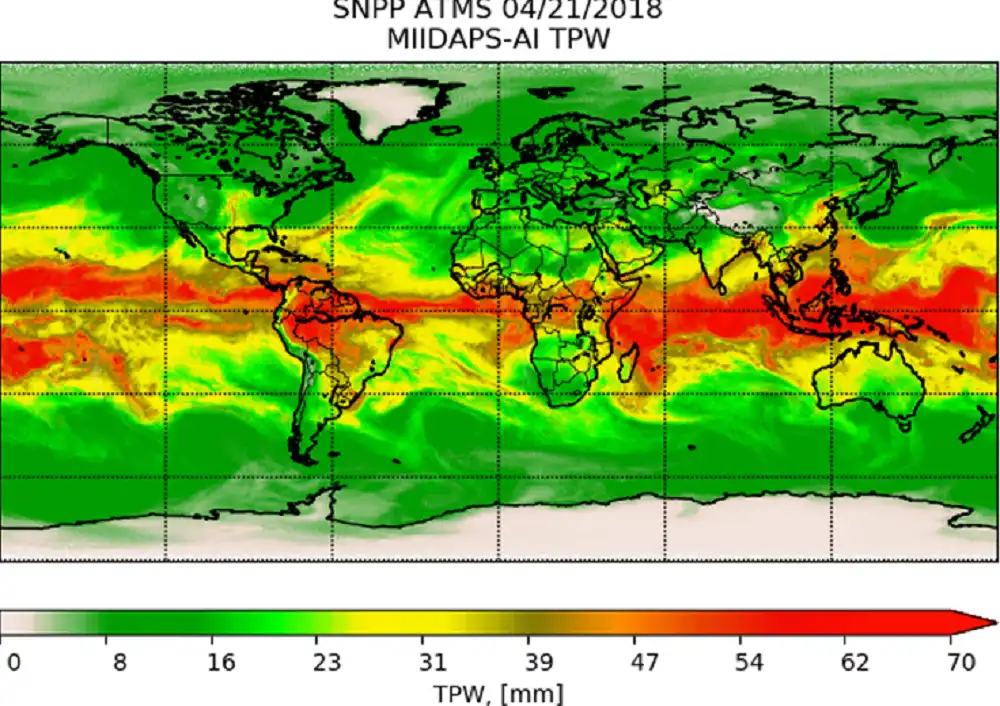
Satellite remote sensing has become one of the most important sources of information for modern ocean monitoring. Modern marine technology including satellite observation systems provides continuous observations across large geographical areas and allows scientists to analyse changes occurring across entire ocean regions.
However, satellite systems generate enormous volumes of data that require advanced analytical approaches. Artificial intelligence has become increasingly important because it can process large-scale satellite datasets and identify patterns that may be difficult to detect through conventional analysis.
AI-based satellite analysis is currently applied to several marine applications, including sea surface temperature monitoring, ocean colour analysis, chlorophyll estimation, marine ecosystem assessment, and detection of environmental anomalies.
Machine learning models can combine satellite observations with additional environmental variables to improve interpretation. For example, satellite measurements of ocean colour can be combined with historical biological observations and physical ocean conditions to improve understanding of marine productivity patterns.
5.1.1 Detecting Marine Environmental Changes From Space
One of the major advantages of AI-based satellite analysis is the ability to detect changes across large ocean areas. Traditional approaches often require manual interpretation of satellite imagery, which becomes increasingly difficult as data volumes continue to increase.
Deep learning models, particularly convolutional neural networks, can automatically analyse satellite images and identify patterns associated with environmental change.
Applications include monitoring marine heatwaves, detecting changes in ocean productivity, identifying coastal changes, and supporting pollution assessment.
For example, marine heatwaves can significantly affect ecosystems by causing coral bleaching, altering species distribution, and disrupting fisheries. AI models can analyse historical temperature patterns and identify conditions associated with these extreme events.
5.2 AI for Underwater Computer Vision and Marine Object Detection

While satellites provide a global perspective of ocean surface conditions, many important marine processes occur underwater. Understanding underwater ecosystems requires observation technologies capable of operating in environments where visibility, lighting, and accessibility create significant challenges.
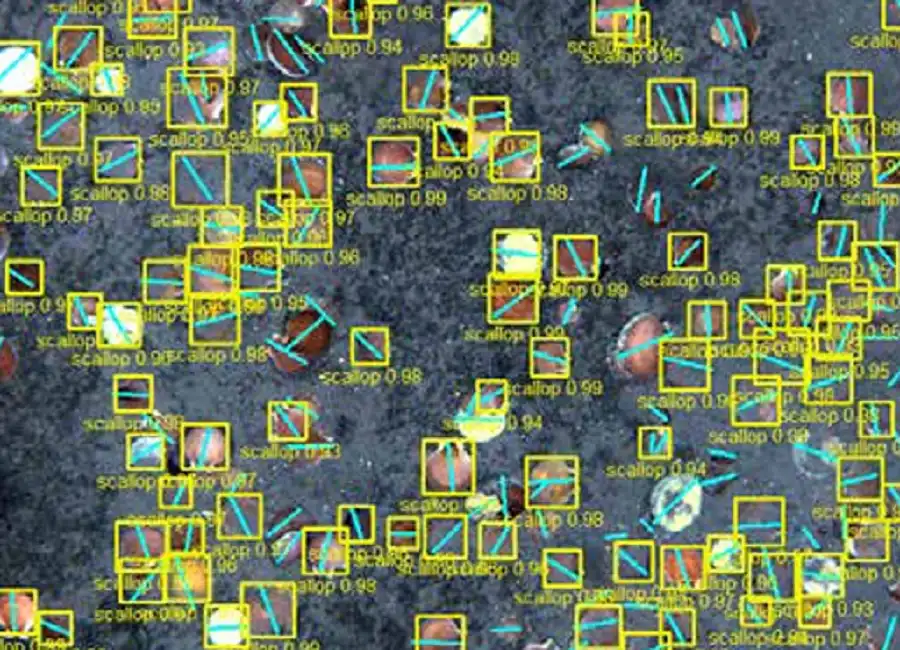
Underwater computer vision has become one of the fastest-growing applications of artificial intelligence in marine science. By combining underwater imaging systems with deep learning algorithms, researchers can automatically analyse photographs and videos collected from marine environments.
Applications include marine species identification, biodiversity assessment, habitat monitoring, Autonomous Underwater Vehicles (AUVs) , and underwater object detection.
5.2.1 Challenges of Underwater Image Analysis
Underwater environments create unique difficulties for computer vision systems. Unlike terrestrial images, underwater images are affected by light absorption, colour distortion, suspended particles, and changing visibility conditions.
As light travels through water, different wavelengths are absorbed at different rates. This creates colour shifts and reduces image quality, particularly at greater depths.
Additional challenges include turbidity, complex biological backgrounds, and limited availability of labelled datasets. These factors make underwater AI development significantly different from conventional computer vision applications.
Despite these challenges, deep learning methods have demonstrated strong potential because they can learn complex visual features directly from large collections of marine images.
5.2.2 AI and Autonomous Underwater Vehicles
Artificial intelligence is becoming increasingly important for autonomous underwater vehicles (AUVs). Traditional AUV missions typically follow predefined routes and collect data for later analysis.
AI-enabled AUVs have the potential to become adaptive scientific platforms capable of analysing information during missions and modifying their behaviour based on observations.
For example, an autonomous vehicle exploring a coral reef could identify an unusual biological feature, adjust its mission path, and collect additional information without requiring immediate human intervention.
This represents a major transition from autonomous data collection toward autonomous scientific exploration.
5.3 AI-Based Coral Reef Monitoring
Coral reefs are among the most biologically diverse ecosystems on Earth and serve as important indicators of marine environmental health. However, monitoring coral reef conditions is a complex task because reef ecosystems contain thousands of interacting biological components.
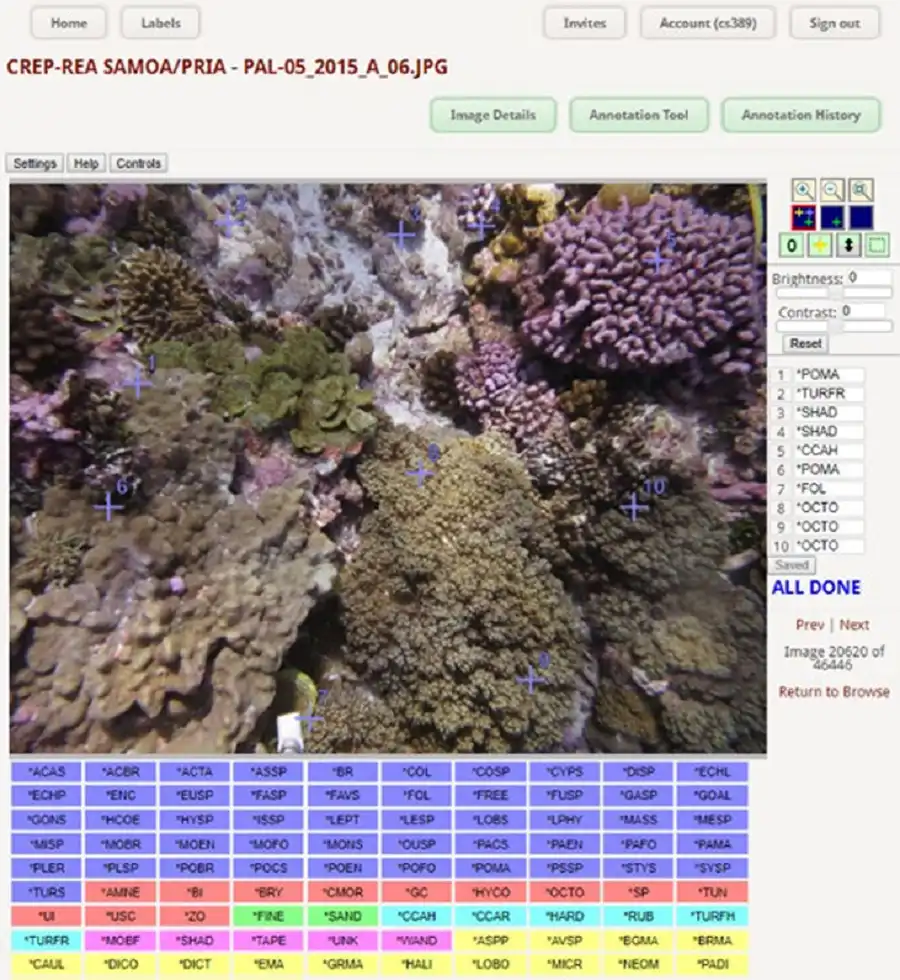
Traditional coral reef monitoring often relies on expert analysis of underwater images. Scientists manually classify coral species, algae coverage, substrate conditions, and signs of ecosystem stress.
Although expert assessment remains essential, the increasing volume of underwater imagery has created a need for automated support systems.
Artificial intelligence provides new capabilities by assisting researchers in analysing large collections of reef images more efficiently.
Systems such as CoralNet demonstrate how AI can support ecological monitoring by accelerating image annotation and improving consistency in large-scale reef assessments.

5.3.1 Human-AI Collaboration in Coral Reef Assessment
Although artificial intelligence can significantly accelerate coral reef image analysis, the most effective approach is not replacing marine experts but creating collaboration between artificial intelligence systems and human researchers.
Marine ecosystems contain complex ecological relationships that cannot always be understood through visual classification alone. An AI system may identify patterns associated with coral structures or habitat changes, but scientific interpretation requires ecological knowledge and understanding of environmental context.
Human-AI collaboration provides a balanced approach. Artificial intelligence can perform repetitive tasks such as image classification, initial annotation, and pattern detection, while marine scientists provide validation, interpretation, and scientific judgement.
This approach is particularly valuable for large-scale monitoring programs where the amount of collected imagery exceeds the capacity of manual analysis. Instead of replacing experts, AI allows researchers to focus their time on higher-level scientific questions.
5.4 AI for Coastal Habitat Mapping and Marine Ecosystem Assessment
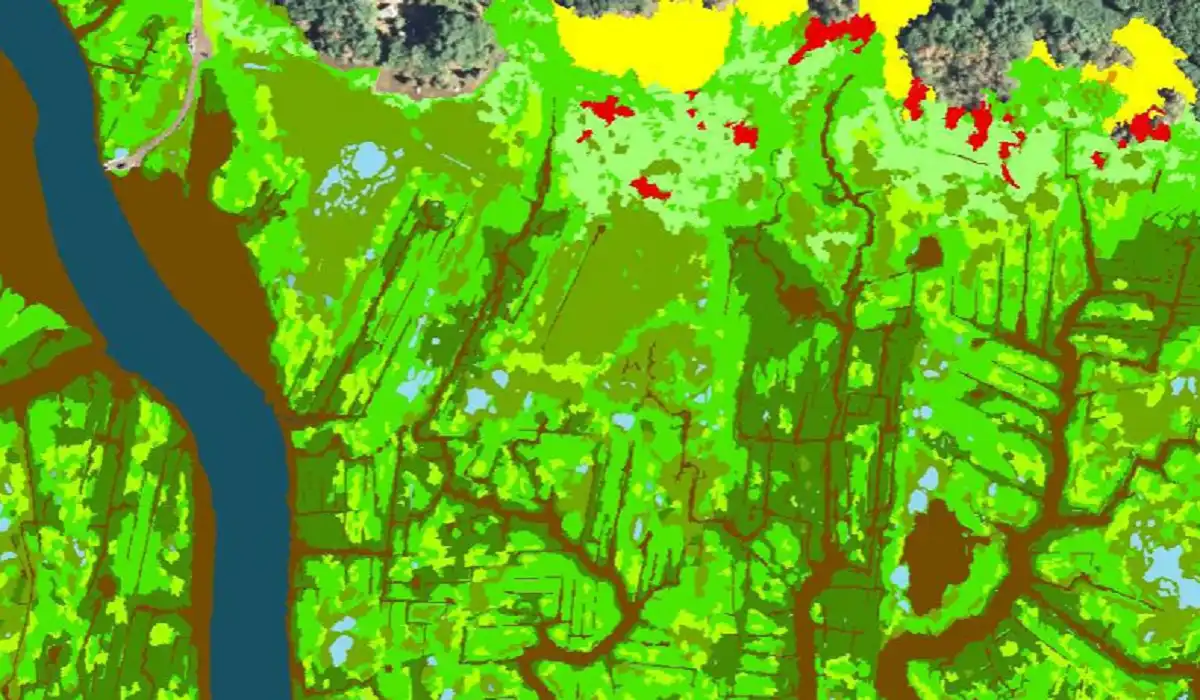
Coastal ecosystems represent some of the most valuable and vulnerable marine environments on Earth. Habitats such as mangrove forests, seagrass meadows, coral reefs, and coastal wetlands provide essential ecological services, including biodiversity support, carbon storage, and coastal protection.
However, these ecosystems are increasingly affected by climate change, coastal development, pollution, and human activities. Effective conservation requires continuous information about habitat distribution and environmental change.
Artificial intelligence is increasingly being used to improve coastal habitat mapping by analysing satellite imagery, geographic information systems, and environmental datasets.
Traditional habitat mapping approaches often require extensive field surveys that are accurate but limited in geographic coverage. AI-assisted methods provide the ability to analyse much larger areas and identify changes over time.
5.4.1 AI-Based Environmental Change Detection
Deep learning models can analyse satellite images and identify patterns associated with habitat transformation. These systems can detect changes in coastal environments that may indicate ecosystem degradation or recovery.
Applications include monitoring mangrove loss, assessing seagrass distribution, identifying coastal erosion, and supporting marine protected area management.
By combining historical observations with current environmental data, AI models can also help predict future habitat vulnerability and support proactive conservation strategies.
This capability represents an important transition from reactive conservation, where actions occur after damage has happened, toward predictive conservation, where risks can be identified before major ecosystem degradation occurs.
5.5 AI-Based Harmful Algal Bloom Detection

Harmful algal blooms (HABs) represent one of the most important environmental challenges affecting coastal ecosystems. Certain algal species can produce toxins, reduce oxygen availability, damage fisheries, and create risks for human health.
Early detection is essential because the ecological and economic consequences of harmful algal blooms can become severe once large-scale events develop.
Traditional monitoring methods often depend on laboratory analysis performed by trained specialists. Although these approaches provide accurate results, they can be time-consuming and difficult to apply continuously across large areas.
Artificial intelligence provides new opportunities by automating the analysis of microscopic images and environmental observations.
5.5.1 AI Microscopy and Early Warning Systems
AI-based microscopy systems can analyse marine samples and identify organisms associated with harmful algal events. Deep learning models can recognize visual characteristics of microscopic organisms and assist researchers in faster classification.
When combined with environmental information such as water temperature, nutrient availability, and ocean circulation patterns, AI systems can contribute to early warning frameworks.
The future of harmful algal bloom monitoring will likely involve integrating AI-based image analysis with satellite observations, autonomous sensors, and predictive ocean models.
5.6 AI for Ocean Forecasting and Predictive Marine Systems
One of the most important goals of ocean monitoring is not only understanding present conditions but predicting future changes. Forecasting plays a central role in climate research, maritime safety, fisheries management, and coastal planning.
Traditional ocean forecasting relies on numerical models based on physical equations describing ocean circulation, heat transfer, and fluid dynamics. These models provide essential scientific understanding but may require significant computational resources.
Artificial intelligence offers complementary capabilities by learning patterns from historical observations and improving prediction efficiency.
AI-based forecasting approaches are being investigated for applications including sea surface temperature prediction, wave forecasting, current estimation, marine heatwave detection, and ecosystem response modelling.
The most promising future systems will likely combine physical ocean models with artificial intelligence rather than replacing physics-based approaches entirely.
| AI Application | Marine Problem Addressed | Data Sources | Scientific Benefit |
|---|---|---|---|
| Satellite AI Analysis | Large-scale ocean monitoring and environmental change detection | Satellite imagery, remote sensing products | Global observation and faster environmental assessment |
| Underwater Computer Vision | Species identification and habitat monitoring | Underwater images and videos | Automated analysis of marine biodiversity data |
| Coral Reef AI Monitoring | Coral ecosystem assessment | Underwater surveys and image datasets | Improved efficiency of reef monitoring programs |
| Coastal Habitat Mapping | Detection of ecosystem changes | Satellite data and GIS information | Supports conservation planning and restoration |
| Harmful Algal Bloom Detection | Early identification of harmful events | Microscopy, satellite, environmental sensors | Improves environmental response capability |
| Ocean Forecasting AI | Prediction of future marine conditions | Historical observations and numerical models | Supports decision-making and risk assessment |
5.7 From Automated Monitoring Toward Intelligent Ocean Systems
The applications discussed in this section demonstrate that artificial intelligence is changing the role of ocean monitoring. Traditional monitoring systems primarily focused on collecting observations, while modern AI-enabled systems increasingly focus on interpretation, prediction, and decision support.
However, the success of marine AI depends on careful integration with scientific knowledge. Artificial intelligence can identify patterns and improve analysis, but understanding marine ecosystems requires interpretation based on oceanographic principles.
The future of AI-based ocean monitoring will therefore depend on combining advanced algorithms with reliable observations, physical models, and human expertise.
This integrated approach provides the foundation for the next generation of marine intelligence systems, including Digital Ocean Twins capable of representing, predicting, and supporting decisions across complex ocean environments.
6. AI for Marine Conservation and Sustainable Ocean Management
Marine ecosystems are facing unprecedented pressures from climate change, pollution, habitat degradation, overexploitation of resources, and increasing human activities. Protecting these ecosystems requires continuous understanding of environmental conditions, species distribution, and ecosystem responses.
Traditional marine conservation approaches have relied on field surveys, expert observations, biological sampling, and long-term monitoring programs. These methods remain essential because they provide detailed scientific information, but their ability to cover large ocean areas continuously is limited.
Artificial intelligence introduces new capabilities for conservation science by transforming large volumes of marine observations into meaningful ecological information. By analysing satellite imagery, underwater photographs, acoustic recordings, environmental sensors, and historical datasets, AI can support faster and more comprehensive conservation decisions.
The role of AI in marine conservation is not to replace ecological expertise but to enhance the ability of scientists and managers to understand complex ecosystems and respond to environmental change.
6.1 AI for Marine Biodiversity Monitoring
Marine biodiversity represents one of the most important indicators of ecosystem health. Understanding biodiversity requires information about species distribution, population changes, habitat conditions, and ecological interactions.
However, monitoring biodiversity in marine environments is particularly challenging because many species are difficult to observe directly. Large areas of the ocean remain inaccessible, and many organisms exist in environments where traditional observation methods are difficult to apply.
Artificial intelligence provides new opportunities by enabling automated analysis of large collections of ecological data. AI systems can process underwater images, acoustic recordings, and environmental observations to identify patterns related to species presence and ecosystem changes.
This capability is especially valuable for large-scale biodiversity assessments where manual analysis would require significant time and scientific resources.
6.2 AI-Based Species Identification and Ecological Assessment
One of the most developed applications of AI in marine conservation is automated species identification using computer vision.
Underwater imaging surveys can generate thousands of photographs and videos containing information about marine organisms and habitats. Traditionally, marine experts manually reviewed these datasets and classified observed species.
Deep learning models can now assist this process by identifying visual characteristics associated with different marine organisms. These systems are being investigated for applications including fish identification, coral classification, marine mammal detection, and benthic habitat assessment.
The advantage of AI-based classification is not only speed. Automated systems can also improve consistency by applying the same analytical process across large datasets.
However, ecological interpretation remains dependent on marine expertise. Species identification alone does not explain ecosystem dynamics; researchers must understand how environmental conditions, biological interactions, and human activities influence observed changes.
6.3 AI and Acoustic Monitoring of Marine Species
Visual observation is not always the most effective approach for monitoring marine organisms. Many species produce underwater sounds that provide valuable information about their presence, behaviour, and distribution.
Artificial intelligence is increasingly being applied to underwater acoustic monitoring by analysing large volumes of sound recordings collected from marine environments.
AI-based acoustic analysis can support detection of species such as whales, dolphins, and other marine organisms by identifying patterns within underwater soundscapes.
This approach is particularly valuable because acoustic monitoring can operate over large areas and provide continuous observations without direct interaction with wildlife.
Nevertheless, acoustic AI systems face challenges including background noise, overlapping signals, and limited availability of labelled acoustic datasets.
6.4 AI in Sustainable Fisheries Management
Fisheries represent one of the most important connections between marine ecosystems and human societies. Sustainable fisheries management requires accurate knowledge of species distribution, population trends, environmental conditions, and human activities.
Artificial intelligence can support fisheries management by analysing environmental data and identifying patterns that influence fish distribution and ecosystem productivity.
Machine learning models can combine information such as ocean temperature, currents, biological productivity indicators, and historical observations to improve understanding of where marine species are likely to occur.
These capabilities can support more sustainable fishing strategies by improving resource assessment and reducing unnecessary environmental impacts.
However, AI-based fisheries management systems must be carefully validated because marine ecosystems are constantly changing. A model that performs well under historical conditions may become less accurate as climate change alters species distribution and ocean conditions.
6.5 AI for Detecting Illegal, Unreported, and Unregulated Fishing
Illegal, unreported, and unregulated (IUU) fishing represents a major challenge for marine conservation and sustainable resource management. Monitoring fishing activity across vast ocean areas is extremely difficult using traditional approaches alone.
Artificial intelligence combined with satellite observation and vessel tracking technologies provides new capabilities for identifying suspicious activities.
AI systems can analyse information from sources such as automatic identification system (AIS) data, satellite imagery, and historical vessel behaviour patterns to detect unusual activities.
These systems can help identify potential risks, including vessels operating in restricted areas, unusual movement patterns, or activities inconsistent with declared operations.
By improving monitoring efficiency, AI can support authorities in focusing limited resources on areas where intervention is most needed.
6.6 AI for Marine Protected Areas
Marine Protected Areas (MPAs) are among the most important tools for conserving marine biodiversity and maintaining ecosystem resilience. However, effective management requires continuous information about ecological conditions and human pressures.
Artificial intelligence can support MPA management by combining observations from multiple sources and providing improved understanding of ecosystem changes.
AI applications in protected areas include habitat monitoring, biodiversity assessment, environmental change detection, and identification of potential threats.
For example, AI-based analysis of satellite imagery can help evaluate changes in coastal habitats, while underwater computer vision can support assessment of reef conditions within protected areas.
The integration of AI with Digital Ocean Twin technologies may provide future managers with the ability to simulate different conservation scenarios and evaluate possible outcomes before implementing decisions.
6.7 AI and Climate Change Adaptation in Marine Ecosystems
Climate change represents one of the greatest challenges facing marine ecosystems. Increasing ocean temperatures, ocean acidification, sea-level rise, and changing circulation patterns are affecting species distribution and ecosystem stability.
Artificial intelligence can contribute to climate adaptation by improving prediction of environmental changes and identifying ecosystems at greater risk.
AI models can analyse historical observations together with current environmental conditions to detect patterns associated with climate-driven changes such as marine heatwaves and ecosystem stress.
For example, predicting marine heatwaves is important because these events can cause coral bleaching, alter fish migration patterns, and disrupt ecosystem relationships.
By improving early warning capabilities, AI can support proactive conservation strategies rather than responses after environmental damage has already occurred.
6.8 Challenges of AI-Based Marine Conservation
Despite its potential, artificial intelligence in marine conservation faces several important limitations.
One major challenge is data availability. Many marine ecosystems remain poorly observed, and AI models depend strongly on the quality and representativeness of available datasets.
Another challenge is ecological complexity. Marine ecosystems involve interactions between thousands of species and environmental factors. AI can identify patterns, but understanding ecological meaning requires scientific interpretation.
There is also a risk that AI systems may create false confidence if uncertainty is not properly communicated. Conservation decisions require transparent models and careful validation before operational implementation.
6.9 Human-AI Collaboration in Marine Conservation
The most effective future conservation systems will combine artificial intelligence with human expertise. AI is highly effective at processing large datasets, detecting patterns, and supporting prediction, while marine scientists provide ecological interpretation and decision-making judgement.
This human-AI collaboration approach is particularly important in conservation because ecological decisions often involve scientific uncertainty, economic considerations, and social factors.
The future of marine conservation will therefore depend not on replacing experts with artificial intelligence, but on creating intelligent systems that enhance human capability and improve environmental decision-making.
| Conservation Application | AI Contribution | Primary Data Sources | Management Benefit |
|---|---|---|---|
| Biodiversity Monitoring | Species identification and ecological pattern recognition | Images, acoustic data, environmental observations | Improved understanding of ecosystem conditions |
| Sustainable Fisheries | Prediction of species distribution and resource patterns | Oceanographic data and historical fisheries records | More sustainable resource management |
| Illegal Fishing Detection | Analysis of vessel behaviour and satellite information | AIS data and remote sensing | Improved enforcement capability |
| Marine Protected Areas | Environmental monitoring and scenario analysis | Satellite, underwater imagery, sensor networks | Better conservation planning |
| Climate Adaptation | Prediction of environmental risks | Historical and real-time ocean observations | Early response to ecosystem changes |
Artificial intelligence is therefore becoming an important component of modern marine conservation. Its greatest contribution is not simply automation, but the ability to transform complex environmental information into knowledge that supports more effective protection and sustainable management of ocean ecosystems.
7. Digital Ocean Twins: The Future of Marine Decision Intelligence

The concept of Digital Ocean Twins represents one of the most advanced developments in the transformation of marine science from observation-based approaches toward intelligent decision-support systems.
Traditional ocean monitoring systems focus primarily on collecting observations and analysing current environmental conditions. Digital Ocean Twins extend this concept by creating dynamic digital representations of marine environments that continuously integrate observations, models, artificial intelligence, and computational simulations.
Unlike a conventional numerical model or visualization platform, a Digital Ocean Twin is designed to maintain a continuous connection between the physical ocean and its digital representation. This connection allows the system to update its understanding of marine conditions, analyse possible future scenarios, and support decision-making processes.
The development of Digital Ocean Twins has become possible because of the convergence of several technological advances, including satellite observation, autonomous marine platforms, high-performance computing, artificial intelligence, and advanced data assimilation methods.
7.1 Understanding the Concept of a Digital Ocean Twin
The term Digital Twin originally emerged in engineering and industrial applications where a digital representation of a physical object or process was connected with real-time data from sensors.
In marine science, applying the Digital Twin concept is significantly more complex because the ocean is not a controlled engineering system. The ocean is continuously changing, influenced by physical processes, biological interactions, atmospheric conditions, and human activities.
Therefore, a Digital Ocean Twin should not be considered an exact copy of the ocean. Instead, it should be understood as a continuously updated scientific representation that combines observations, physical knowledge, and computational intelligence.
7.2 Digital Model, Digital Shadow, and Digital Twin
Understanding the difference between related digital concepts is important because not every digital representation of the ocean can be considered a Digital Twin.
| Concept | Description | Connection With Physical Ocean |
|---|---|---|
| Digital Model | A computational representation of a physical system used for simulation or analysis | No automatic data connection |
| Digital Shadow | A digital representation that receives information from the physical system | Usually one-directional data flow |
| Digital Twin | A dynamic digital representation continuously updated through observations and analysis | Continuous interaction between physical and digital systems |
A numerical ocean circulation model, for example, can represent physical ocean processes and simulate future conditions. However, without continuous integration of real-world observations and adaptive updating, it remains a model rather than a Digital Ocean Twin.
The defining characteristic of a Digital Ocean Twin is therefore not simply simulation capability, but the continuous relationship between observation, analysis, prediction, and decision-making.
7.3 Architecture of a Digital Ocean Twin System
A functional Digital Ocean Twin requires integration between multiple technological layers. These layers connect the physical ocean environment with digital analysis and decision-support capabilities.
(Real Marine System)
(Satellites, AUVs, Sensors, Research Vessels)
(Data Fusion and Data Assimilation)
(Physics-Based Numerical Models)
(Machine Learning and Deep Learning)
(Prediction and Simulation)
(Management and Operations)
7.4 Observation Layer: Connecting the Real Ocean With Digital Systems
The foundation of every Digital Ocean Twin is reliable observation. Without continuous and accurate information from the physical ocean, digital representations cannot remain scientifically meaningful.
Modern observation networks provide information from multiple sources, including satellites, autonomous underwater vehicles, ocean gliders, Argo floats, research vessels, and coastal sensor systems.
Each observation technology contributes different information. Satellites provide broad spatial coverage, autonomous vehicles provide detailed local measurements, and fixed sensors provide continuous monitoring at specific locations.
The challenge is not only collecting these observations but integrating them into a unified representation of ocean conditions.
7.5 Data Assimilation and Information Integration
Ocean observations are inherently incomplete. Measurements contain uncertainty, cover different spatial scales, and are collected using different technologies.
Data assimilation provides the mechanism for combining observations with numerical models to create improved estimates of the current ocean state.
Artificial intelligence can enhance this process by identifying relationships between different data sources, improving parameter estimation, and supporting more efficient integration of heterogeneous marine information.
The combination of observations, numerical models, and AI creates a more comprehensive understanding of marine environments than any individual approach can provide.
7.6 The Role of Artificial Intelligence in Digital Ocean Twins
Artificial intelligence is one of the key technologies that transforms a digital ocean model into an intelligent decision-support system.
AI contributes to Digital Ocean Twins through several important capabilities, including pattern recognition, prediction, anomaly detection, and automated data interpretation.
7.6.1 Predictive Capability
One of the most important advantages of Digital Ocean Twins is their ability to explore future scenarios. AI models can analyse historical observations and current conditions to improve predictions of marine changes.
Potential applications include predicting marine heatwaves, ecosystem responses, pollution movement, and coastal hazards.
7.6.2 Anomaly Detection
The ocean constantly produces complex patterns, making rapid identification of unusual events extremely important.
AI systems can detect anomalies such as unexpected temperature changes, unusual biological activity, or environmental disturbances by comparing current observations with historical patterns.
7.6.3 Intelligent Decision Support
The ultimate purpose of a Digital Ocean Twin is not only prediction but improved decision-making.
Marine managers, researchers, and operational organizations can use Digital Ocean Twins to evaluate possible scenarios and select more effective responses.
7.7 Physics-Based Models and Artificial Intelligence Integration
A critical aspect of Digital Ocean Twins is the relationship between artificial intelligence and traditional ocean modelling.
Physical ocean models remain essential because they represent fundamental processes such as fluid dynamics, heat transfer, circulation patterns, and conservation laws.
However, these models can face limitations related to computational cost, parameter uncertainty, and difficulties representing highly complex biological processes.
Artificial intelligence provides complementary capabilities by improving efficiency, identifying hidden patterns, and accelerating prediction processes.
The future direction of Digital Ocean Twins is therefore based on hybrid intelligence: combining the scientific reliability of physics-based models with the analytical power of artificial intelligence.
| Digital Ocean Twin Component | Function | Technologies Involved |
|---|---|---|
| Observation Layer | Collects information from the physical ocean | Satellites, AUVs, sensors, research vessels |
| Data Integration Layer | Combines multiple marine datasets | Data fusion, assimilation methods |
| Modelling Layer | Represents physical ocean processes | Numerical ocean models |
| AI Layer | Provides prediction and pattern recognition | Machine learning, deep learning |
| Decision Layer | Supports marine management decisions | Simulation, forecasting, scenario analysis |
7.8 Applications of Digital Ocean Twins
Digital Ocean Twins have potential applications across multiple marine sectors because they provide a framework for combining observations, predictions, and decision support.
In climate research, Digital Ocean Twins can help evaluate ocean warming trends, circulation changes, and ecosystem responses. In marine conservation, they can support evaluation of habitat vulnerability and conservation strategies.
In maritime operations, Digital Ocean Twins can improve route planning, environmental risk assessment, and offshore activity management. In coastal regions, they can support resilience planning against flooding, storms, and environmental change.
7.9 Challenges of Digital Ocean Twin Development
Despite their significant potential, Digital Ocean Twins face important scientific and technological challenges.
One challenge is data integration. Combining information from multiple observation systems with different characteristics remains technically complex.
Another challenge is computational demand. High-resolution simulations combined with AI analysis require significant computing resources.
Scientific reliability is also essential. Digital Ocean Twins must provide validated predictions and communicate uncertainty effectively before they can support critical environmental decisions.
7.10 Future Perspective
Digital Ocean Twins represent a major step toward intelligent ocean management. Their future development will depend on the successful integration of artificial intelligence, autonomous observation systems, physical modelling, and human expertise.
The ultimate goal is not to create a perfect digital copy of the ocean, but to develop a continuously improving scientific framework capable of understanding change, predicting future conditions, and supporting sustainable decisions.
As marine data availability continues to expand, Digital Ocean Twins may become one of the most important platforms for connecting ocean observation with real-world decision-making.
8. Challenges and Limitations of Artificial Intelligence at Sea
Artificial intelligence has demonstrated significant potential for transforming ocean monitoring, marine conservation, and environmental prediction. However, the implementation of AI in marine environments presents challenges that are fundamentally different from many terrestrial applications.
The ocean is an extremely dynamic and complex system influenced by interacting physical, chemical, and biological processes. Unlike controlled industrial environments, marine systems cannot be fully observed, replicated, or controlled. As a result, developing reliable artificial intelligence systems for ocean applications requires more than advanced algorithms.
Successful marine AI depends on the availability of high-quality observations, scientifically meaningful datasets, reliable validation methods, computational resources, and integration with established oceanographic knowledge.
Understanding these limitations is essential because inaccurate or poorly validated AI systems could negatively influence conservation strategies, environmental management, and operational decision-making.
8.1 Data Availability and Quality Limitations
The performance of artificial intelligence systems depends strongly on the quality and quantity of available training data. In marine environments, obtaining sufficient and representative datasets remains one of the greatest challenges.
Although modern observation technologies have expanded marine data availability, large areas of the ocean remain poorly monitored. Deep-sea environments, remote ocean regions, and polar ecosystems continue to have limited observations compared with coastal and economically important areas.
This uneven distribution of observations creates challenges for AI models because they learn from available datasets. If training data does not represent the full diversity of marine environments, model performance may decrease when applied to new conditions.
For example, an underwater image recognition system trained primarily on clear tropical reef environments may perform poorly in deep-sea environments, highly turbid coastal waters, or regions with different biological communities.
8.2 Data Bias and Representation Problems
Data bias is one of the most important concerns in artificial intelligence applications for ocean science. AI models do not automatically understand the ocean; they learn statistical relationships from the information provided during training.
If the available data contains geographical, temporal, or biological biases, these limitations may influence AI predictions.
| Bias Type | Marine Example | Potential Impact |
|---|---|---|
| Geographical Bias | More observations available in coastal regions than remote oceans | Reduced reliability in poorly observed areas |
| Temporal Bias | Historical data may not represent future climate conditions | Lower prediction accuracy under changing environments |
| Biological Bias | Some species are extensively studied while others remain poorly documented | Unequal biodiversity assessment capability |
| Sensor Bias | Different observation technologies produce different data characteristics | Difficulty integrating multiple data sources |
Reducing bias requires broader observation networks, improved international data sharing, and the development of AI methods capable of estimating uncertainty.
8.3 Domain Shift and Model Generalization
A major challenge in artificial intelligence is ensuring that models remain reliable when applied outside the conditions where they were trained.
This problem, often described as domain shift, is particularly important in marine environments because ocean conditions continuously change across geographical regions and time periods.
For example, a model trained using historical ocean temperature patterns may become less accurate as climate change modifies circulation patterns and ecosystem behaviour.
Similarly, an AI system developed for one coastal region may not perform equally well in another region because environmental conditions, species composition, and observation characteristics may differ.
Future marine AI systems will therefore require continuous learning, regular validation, and adaptation to changing environmental conditions.
8.4 Explainability and Trustworthy Artificial Intelligence
One of the most significant challenges in advanced artificial intelligence is explainability. Many deep learning models can achieve high prediction accuracy, but their internal decision-making processes are often difficult to interpret.
This creates an important question for marine science:
Can scientists and decision-makers trust an AI prediction if they cannot understand the reasons behind it?
This issue becomes particularly important when AI outputs influence decisions related to ecosystem management, fisheries, conservation priorities, or environmental protection.
For example, if an AI model predicts that a coral reef is at high risk of degradation, researchers need to understand which environmental factors contributed to this prediction and how confident the model is.
8.4.1 Explainable AI for Ocean Science
Explainable Artificial Intelligence (XAI) aims to improve transparency by identifying the factors influencing AI predictions.
In ocean applications, explainable AI can support researchers by helping them evaluate model behaviour, identify errors, understand environmental relationships, and improve scientific confidence.
However, achieving both high predictive performance and complete interpretability remains a major research challenge.
8.5 Artificial Intelligence and Physical Ocean Understanding
Although AI is highly effective at identifying patterns, it does not automatically understand the physical mechanisms that control ocean processes.
Marine environments are governed by fundamental scientific principles, including fluid dynamics, energy transfer, chemical processes, and ecological interactions.
A purely data-driven model may identify correlations between variables without understanding the underlying causes. However, scientific understanding requires more than correlation; it requires interpretation based on physical mechanisms.
For this reason, the future of marine AI is unlikely to depend on replacing physical ocean models. Instead, the most reliable systems will combine artificial intelligence with established scientific knowledge.
8.6 Computational Requirements and Energy Challenges
Advanced artificial intelligence models require significant computational resources. Large deep learning systems may require powerful hardware, extensive storage capacity, and considerable energy consumption.
These requirements create practical challenges for marine applications, especially because many observation platforms operate in remote environments with limited energy and communication capability.
Autonomous underwater vehicles, for example, may collect large volumes of imagery and sensor data, but transferring all information to shore can be inefficient because underwater communication is limited and expensive.
8.6.1 Edge AI for Marine Applications
Edge AI provides a potential solution by enabling artificial intelligence processing directly on marine platforms.
Instead of transmitting all collected data, intelligent systems can analyse information locally and send only important results.
For example, an autonomous underwater vehicle equipped with AI could identify marine species, detect unusual objects, or recognize environmental changes during its mission.
This capability can improve response speed, reduce communication requirements, and enable more autonomous marine exploration.
8.7 Operational Challenges in Marine Environments
Deploying AI systems at sea introduces additional engineering challenges. Marine environments expose technology to harsh conditions, including corrosion, pressure changes, temperature variation, biofouling, and communication limitations.
An AI system that performs well under laboratory conditions may face difficulties during long-term marine deployment.
Reliable marine AI therefore requires not only advanced algorithms but also robust hardware, sensor calibration, fault tolerance, and continuous maintenance.
8.8 Human Expertise and Human-AI Collaboration
A common misconception is that artificial intelligence will replace marine scientists. In reality, the most successful marine AI systems are expected to enhance human capability rather than eliminate the need for expert knowledge.
Artificial intelligence is highly effective at processing large datasets, identifying patterns, and supporting prediction. However, scientists remain essential for interpretation, validation, and responsible decision-making.
This approach is known as human-in-the-loop artificial intelligence, where AI systems provide analytical support while humans maintain scientific control and judgement.
| AI Capability | Human Expertise | Combined Benefit |
|---|---|---|
| Pattern recognition | Scientific interpretation | Better understanding of marine processes |
| Large-scale data analysis | Ecological knowledge | Improved conservation decisions |
| Prediction and classification | Validation and judgement | More reliable operational systems |
8.9 Ethical and Governance Considerations
As artificial intelligence becomes increasingly integrated into marine management, questions related to governance and responsibility become more important.
Important considerations include data ownership, accessibility of marine information, transparency of AI-based decisions, and responsibility when automated systems influence environmental management.
Because the ocean is a global resource, effective marine AI development requires international collaboration between researchers, governments, organizations, and technology providers.
8.10 Building Reliable Ocean Intelligence Systems
The future success of artificial intelligence in ocean science depends on creating systems that are accurate, transparent, scientifically consistent, and operationally reliable.
A trustworthy ocean intelligence framework should combine:
Artificial intelligence has the potential to transform ocean monitoring, but its success depends on responsible integration with science, engineering, and human expertise. The goal is not simply creating more powerful algorithms, but developing reliable systems capable of supporting sustainable understanding and management of marine environments.
9. Future Research Directions: Building the Intelligent Ocean
The development of artificial intelligence in ocean science is still at an early but rapidly advancing stage. Current AI applications have already demonstrated significant value in marine monitoring, ecosystem assessment, forecasting, and decision support. However, the future of ocean intelligence will depend on moving beyond individual AI applications toward integrated systems capable of continuously learning from observations and supporting complex marine decisions.
The next generation of marine AI will not be defined only by more advanced algorithms. Instead, progress will depend on the integration of multiple technological domains, including autonomous observation platforms, artificial intelligence, physical ocean modelling, high-performance computing, and Digital Ocean Twin frameworks.
The long-term objective is a transition from passive observation toward an intelligent ocean system capable of observing environmental changes, analysing complex patterns, predicting future conditions, and supporting sustainable management decisions.
9.1 Autonomous Ocean Observation Networks
One of the most important future directions in marine technology is the development of intelligent autonomous observation networks. Existing autonomous platforms such as autonomous underwater vehicles, ocean gliders, and smart sensors have already expanded the ability to collect information from challenging marine environments.
However, many current systems still operate according to predefined missions. An autonomous vehicle typically follows a planned route, collects measurements, and transfers data for later analysis.
Future AI-enabled marine platforms are expected to become more adaptive. Instead of only collecting information, they will increasingly analyse observations during operation and modify their behaviour based on environmental conditions.
For example, an autonomous underwater vehicle investigating a coral reef could identify an unusual biological pattern, determine that additional information is required, modify its route, and collect targeted observations without waiting for external instructions.
This represents a fundamental transition from autonomous data collection toward autonomous scientific exploration.
9.1.1 Intelligent Marine Agents
A future development of autonomous systems is the emergence of intelligent marine agents. Unlike traditional automated systems designed for specific tasks, AI agents are expected to perform multiple connected activities, including analysing information, planning actions, and adapting to changing conditions.
In marine science, intelligent agents could support researchers by analysing environmental datasets, identifying unusual events, comparing observations with historical records, and recommending additional measurements.
For example, an AI marine agent could analyse satellite observations, identify a possible harmful algal bloom, compare current conditions with previous events, and suggest targeted underwater sampling.
Such systems would not replace scientists but would increase the efficiency of scientific workflows.
9.2 Edge AI for Real-Time Ocean Intelligence
A major challenge in ocean monitoring is the limitation of communication and energy resources in remote marine environments. Many platforms operate far from research facilities, making continuous data transmission difficult and expensive.
Edge AI provides a potential solution by allowing artificial intelligence algorithms to operate directly on marine observation platforms rather than relying entirely on remote processing.
This approach enables autonomous systems to analyse information locally and transmit only the most important results.
For example, an underwater vehicle equipped with edge AI could automatically identify marine species, detect unusual objects, classify environmental conditions, and prioritize important observations before sending information to researchers.
The advantages of edge AI include faster response, reduced communication requirements, lower energy consumption, and improved autonomy.
9.3 Multi-Modal Artificial Intelligence for Ocean Systems
Future ocean intelligence systems will require the ability to understand multiple forms of marine information simultaneously. Ocean environments are observed through a wide variety of data sources, including satellite imagery, underwater photographs, acoustic recordings, chemical measurements, and numerical simulations.
Traditional approaches often analyse these datasets separately. However, marine processes are interconnected, and a complete understanding of ocean conditions requires combining information from multiple sources.
Multi-modal artificial intelligence aims to integrate different types of information into a unified analytical framework.
| Data Source | Information Provided | AI Opportunity |
|---|---|---|
| Satellite Observation | Large-scale surface ocean information | Global environmental pattern recognition |
| Underwater Imaging | Species and habitat information | Automated ecological assessment |
| Acoustic Monitoring | Marine species and soundscape information | Species detection and behaviour analysis |
| Ocean Sensors | Physical and chemical measurements | Real-time prediction and anomaly detection |
| Numerical Models | Physical ocean process simulation | Physics-informed AI improvement |
The combination of these different data sources could significantly improve the accuracy and reliability of future marine prediction systems.
9.4 Next Generation Digital Ocean Twins
Digital Ocean Twins are expected to become one of the most important platforms for future marine decision intelligence. Current Digital Ocean Twin concepts are already combining observations, models, and computational analysis, but future systems will become more adaptive and predictive.
Next-generation Digital Ocean Twins may include continuous real-time updating, autonomous data acquisition, advanced AI prediction, and scenario-based simulation capabilities.
These systems could allow researchers and decision-makers to evaluate possible future conditions before implementing actions.
Examples of future Digital Ocean Twin applications include:
- Predicting ecosystem responses to climate change.
- Evaluating marine conservation strategies.
- Assessing pollution transport and environmental risks.
- Optimizing offshore and maritime operations.
- Supporting coastal resilience planning.
9.5 Physics-Informed and Explainable Marine AI
Future research will increasingly focus on developing AI systems that are not only accurate but also scientifically reliable.
A major limitation of many current AI approaches is that they can identify patterns without providing sufficient understanding of the physical mechanisms behind those patterns.
Physics-informed AI represents a promising direction because it combines machine learning capabilities with established scientific principles.
At the same time, explainable AI will become increasingly important because marine scientists and decision-makers need to understand why a model produces a specific prediction.
Reliable ocean intelligence requires both predictive capability and scientific transparency.
9.6 Research Gaps and Future Priorities
Despite rapid technological progress, several research gaps must be addressed before AI can become fully integrated into operational ocean management systems.
| Research Gap | Current Challenge | Future Direction |
|---|---|---|
| Marine AI Datasets | Limited availability of standardized and labelled datasets | Development of open international marine data resources |
| Model Reliability | Difficulty evaluating uncertainty and generalization | Explainable and adaptive AI systems |
| AI-Physics Integration | Limited connection between data-driven and physical models | Hybrid ocean intelligence frameworks |
| Computational Sustainability | High energy requirements of advanced AI systems | Efficient algorithms and edge computing |
| Operational Deployment | Challenges in harsh marine environments | Robust autonomous marine technologies |
9.7 Toward a Self-Learning Ocean System
The ultimate vision of marine artificial intelligence is the development of a self-learning ocean system. Such a system would continuously receive information from observation networks, analyse environmental changes, improve its predictions, and support human decision-making.
Such a framework would represent a fundamental transformation in marine science. Instead of simply collecting observations after environmental changes occur, intelligent ocean systems could help anticipate future conditions and support preventive action.
The future of ocean intelligence will therefore depend on collaboration between artificial intelligence researchers, oceanographers, engineers, policymakers, and environmental scientists.
Artificial intelligence alone cannot solve every challenge facing the ocean. However, when combined with scientific knowledge and advanced observation technologies, it can become a powerful tool for understanding, protecting, and sustainably managing marine environments.
10. Conclusion: Toward an Intelligent Ocean Future
The ocean is entering a new era of scientific observation and environmental management. For centuries, understanding marine systems depended primarily on direct measurements collected through research expeditions and specialized instruments. These approaches created the foundation of modern oceanography, but the increasing complexity and scale of marine challenges require new analytical capabilities.
The rapid expansion of satellite observations, autonomous platforms, sensor networks, and numerical models has transformed the ocean into a highly data-rich environment. However, collecting more information alone does not guarantee better understanding. The central challenge of modern marine science is transforming large volumes of heterogeneous observations into reliable knowledge and actionable decisions.
Artificial Intelligence provides an important pathway for addressing this challenge. Through machine learning, deep learning, computer vision, and physics-informed approaches, AI enables researchers to identify complex patterns, analyse large datasets, improve predictions, and support environmental decision-making.
Throughout this review, several major applications of artificial intelligence in ocean monitoring have been examined. Satellite-based AI analysis demonstrates how machine learning can transform global observations into information about marine environmental changes. Underwater computer vision shows how deep learning can support biodiversity monitoring, species identification, and habitat assessment. AI-based forecasting and Digital Ocean Twin frameworks demonstrate the potential of intelligent systems to move from observation toward prediction.
However, the future of marine artificial intelligence depends on responsible and scientifically grounded development. AI systems must overcome important challenges, including limited datasets, observation bias, uncertainty, computational requirements, and the need for explainable predictions.
The ocean is a complex physical and biological system, and artificial intelligence should not be viewed as a replacement for traditional ocean science. Instead, the most successful future systems will combine AI capabilities with physical ocean models, continuous observations, and human expertise.
10.1 The Transition From Ocean Observation to Ocean Intelligence
The evolution of ocean monitoring can be understood as a transition through several stages. The first stage focused on collecting measurements from the marine environment. The second stage introduced global observation through satellites and autonomous systems. The current stage is focused on transforming observations into intelligence.
Ocean intelligence represents the ability to combine observations, scientific models, and artificial intelligence to understand current conditions, predict future changes, and support informed decisions.
10.2 The Future Role of Digital Ocean Twins
Digital Ocean Twins represent a major step toward integrating marine observations, artificial intelligence, and scientific modelling into a unified framework. Their importance extends beyond visualization because they provide a pathway toward continuous environmental understanding and scenario-based decision support.
Future Digital Ocean Twins may allow researchers and decision-makers to evaluate possible environmental outcomes before implementing actions. This capability could support climate adaptation, marine conservation, coastal resilience planning, and sustainable maritime operations.
However, the success of Digital Ocean Twins will depend on the quality of their underlying observations, the reliability of their models, and their ability to communicate uncertainty effectively.
10.3 Artificial Intelligence as a Scientific Partner
The future relationship between artificial intelligence and marine science should be based on collaboration rather than replacement. AI excels at analysing complex datasets, identifying patterns, and supporting prediction, while marine scientists provide interpretation, validation, and scientific understanding.
This human-AI partnership will be essential because marine decisions often involve ecological, economic, and social considerations that cannot be solved through algorithms alone.
The most valuable contribution of artificial intelligence is therefore not automation by itself, but the ability to expand human capability and improve understanding of one of Earth’s most complex systems.
10.4 Final Perspective
The future of ocean monitoring will not be defined only by the amount of data collected, but by the ability to transform information into knowledge and knowledge into responsible action.
Artificial intelligence, combined with advanced observation technologies, numerical modelling, and Digital Ocean Twins, provides the foundation for a new generation of marine intelligence systems.
These systems have the potential to improve how humanity observes, predicts, and manages the ocean. By connecting technology with scientific understanding, artificial intelligence can become a powerful tool for protecting marine ecosystems, supporting sustainable development, and improving our ability to respond to global environmental change.
The transition from ocean observation to ocean intelligence represents more than a technological evolution. It represents a new approach to understanding the marine environment—one where data, science, and artificial intelligence work together to create a more sustainable relationship with the ocean.
References
-
Chen, G., Yang, J., Huang, B., Ma, C., Tian, F., Ge, L., Xia, L., & Li, J. (2023).
Toward digital twin of the ocean: From digitalization to cloning.
Intelligent Marine Technology and Systems, 1, 3.
https://doi.org/10.1007/s44295-023-00003-2 -
Duan, W., Huang, B., Zhang, X., et al. (2022).
Recent Developments in Artificial Intelligence in Oceanography.
Intelligent Computing.
https://doi.org/10.34133/2022/9870950 -
Schneider, J., Klüner, A., Zielinski, O., et al. (2023).
Towards Digital Twins of the Oceans: The Potential of Machine Learning for Monitoring the Impacts of Offshore Wind Farms on Marine Environments.
Sensors, 23(10), 4581.
https://doi.org/10.3390/s23104581 -
Kourafalou, V. H., et al. (2024).
Marine digital twins for enhanced ocean understanding.
Remote Sensing Applications: Society and Environment.
https://doi.org/10.1016/j.rsase.2024.101268 -
Metheniti, V., Parasyris, A., Pereira, R. S., & Kazanjian, G. (2025).
Recent Advancements and Challenges in Artificial Intelligence for Digital Twins of the Ocean.
Climate, 14(1), 3.
https://doi.org/10.3390/cli14010003 -
Tuia, D., Schindler, K., Demir, B., et al. (2023).
Artificial intelligence to advance Earth observation: A review of models, recent trends, and pathways forward.
IEEE Geoscience and Remote Sensing Magazine.
https://arxiv.org/abs/2305.08413 -
European Union Copernicus Marine Service.
Ocean Monitoring and Marine Data Services.
https://marine.copernicus.eu/ -
Global Ocean Observing System (GOOS).
Global Ocean Observing System Framework.
Home
-
NASA Earth Science Division.
Earth Observation and Ocean Remote Sensing Programs.
https://earthdata.nasa.gov/ -
Argo Program.
Global Array of Profiling Floats for Ocean Observation.
https://argo.ucsd.edu/